A VPS, or virtual private server, is a share of a physical server with its own reserved memory, processor and storage. Unlike shared hosting, the customer controls it fully and installs everything, often by typing commands. All ten providers here give root access, meaning full administrator control of the server. Six checks narrow the list, each based on vendor pages read on 19 November 2026.
1. Decide who looks after the server
Most VPS plans are unmanaged: the provider keeps the hardware running, and the customer handles updates, security and repairs. That suits someone at ease with a command line, the text window used to control a server. If nobody on your team is, price a managed plan from the start.
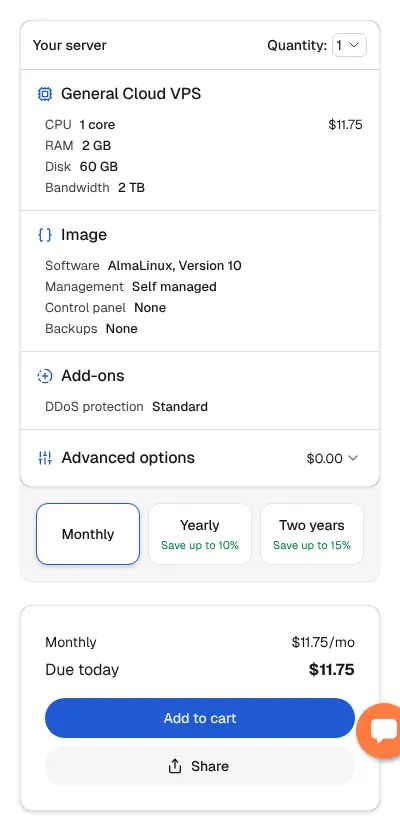
Liquid Web adds full management for $39.00 a month, so its $11.75 server comes to $50.75. Hostwinds sells a managed plan at a regular $10.99 a month. DigitalOcean offers management only through Cloudways, a separate product.
2. Compare the monthly price, not the long-term offer
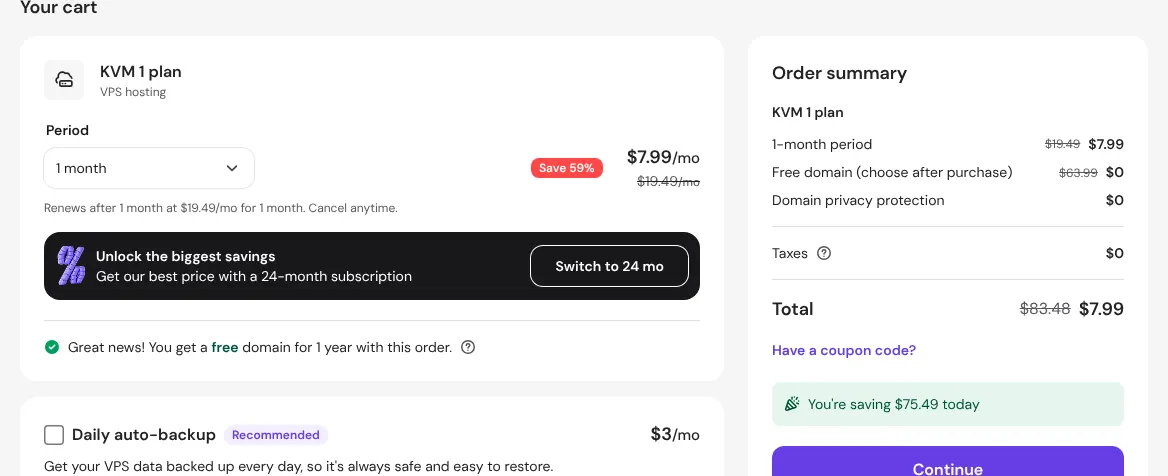
The large price on a VPS page often needs a long term paid in advance. Hostinger shows KVM 1 at $6.49 a month, but only on a 24-month term. Paid month by month, the same plan costs $19.49.
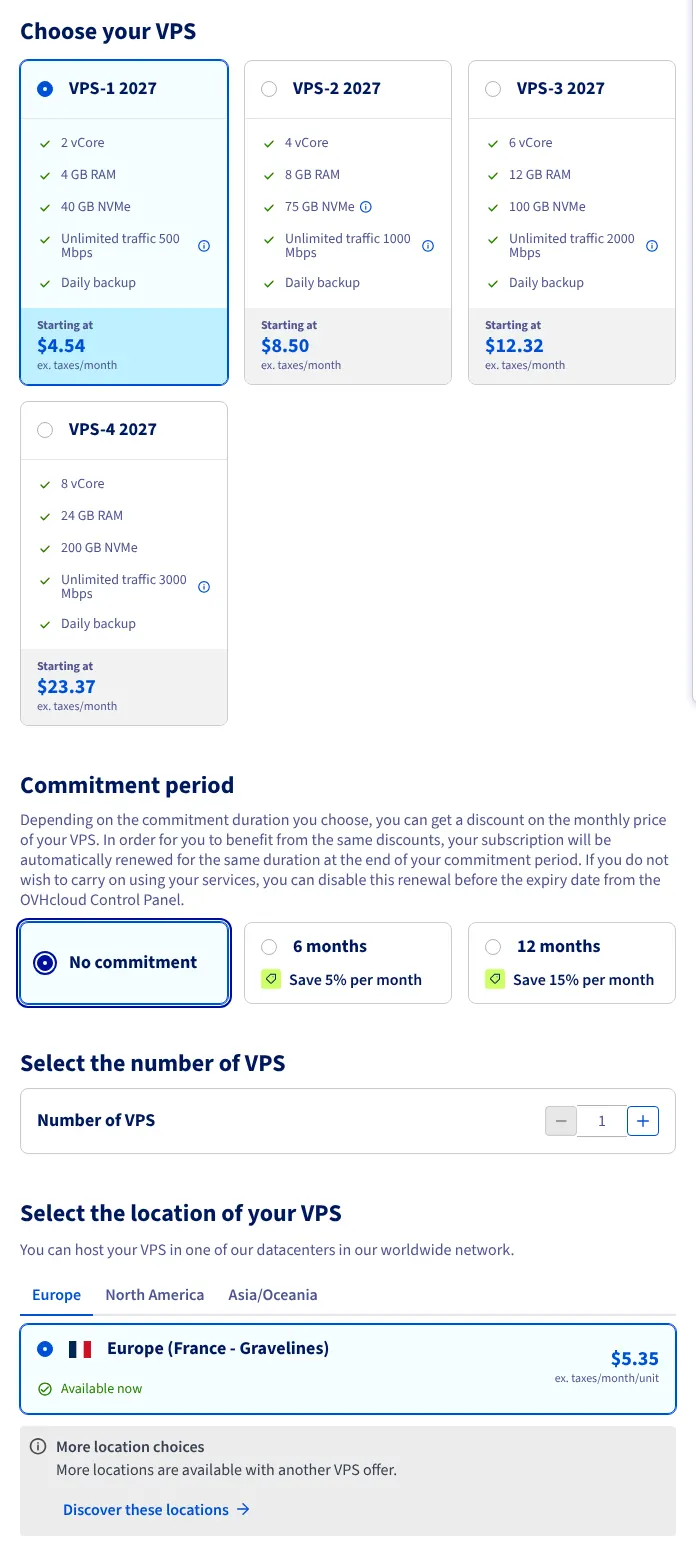
OVHcloud's $4.54 needs a 12-month commitment, against $5.35 without one. Compare the price you would pay for a single month before committing to more.
3. Count what costs extra
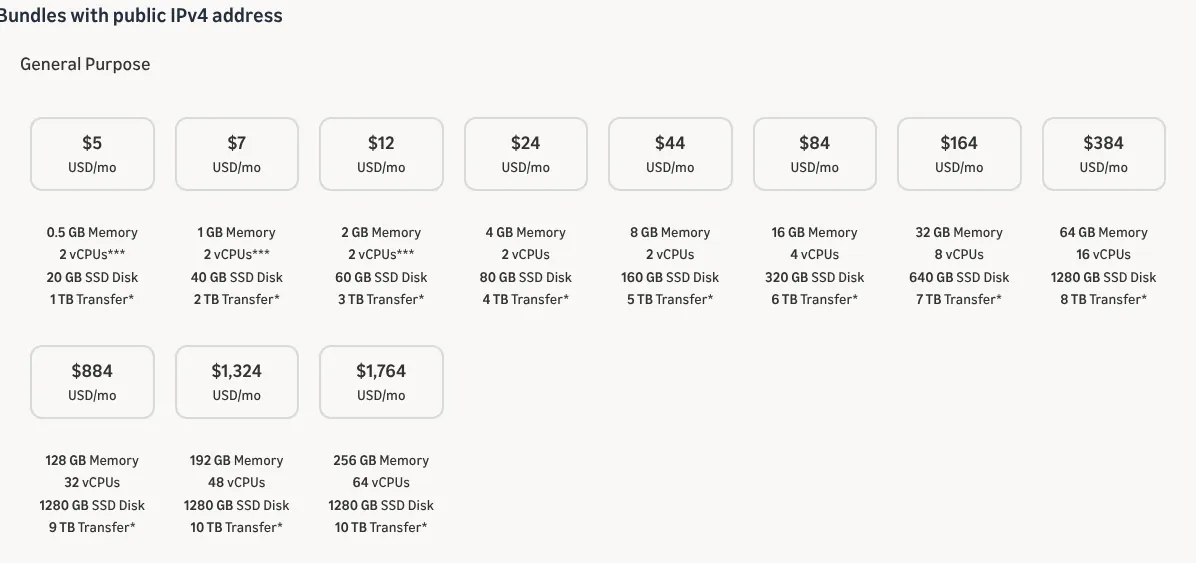
Backups, IPv4 addresses and website panels change the real bill. On DigitalOcean, weekly backups take the $4 server to $4.80 a month. On Akamai Cloud, backups take the $5 Nanode to $7.
Scaleway's smallest instance bills storage and its IPv4 address apart, and the address alone costs €3.65 for a month of 730 hours. A control panel such as cPanel, a web page for managing sites and email without commands, is often a paid licence. Liquid Web charges $32.75 a month for cPanel.
4. Check the memory and the processor
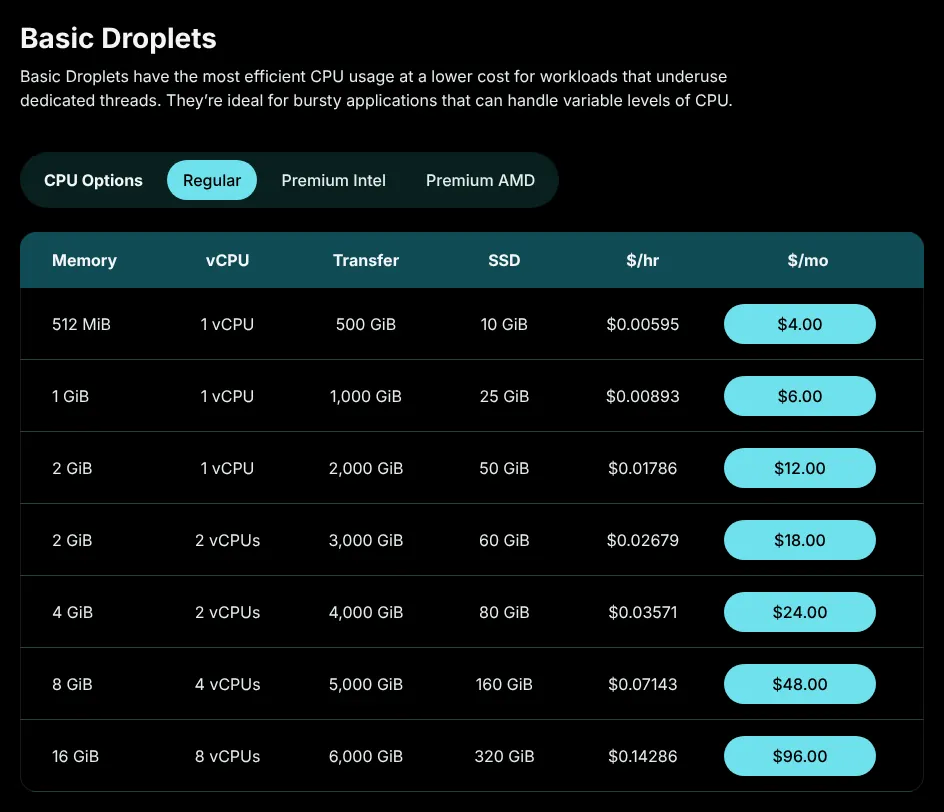
Memory decides how many sites or apps a server can run at once. The entry plans here range from 512 MiB on DigitalOcean and 0.5 GB on Lightsail to 4 GB on Hostinger and OVHcloud.
Lightsail's vCPUs (virtual processors) are burstable, running at a baseline with short peaks. Hostinger's work on credits and drop to 20% of their power once a busy server uses them up. A site with steady heavy traffic needs a plan with dedicated processors.
5. Pick a location close to your visitors
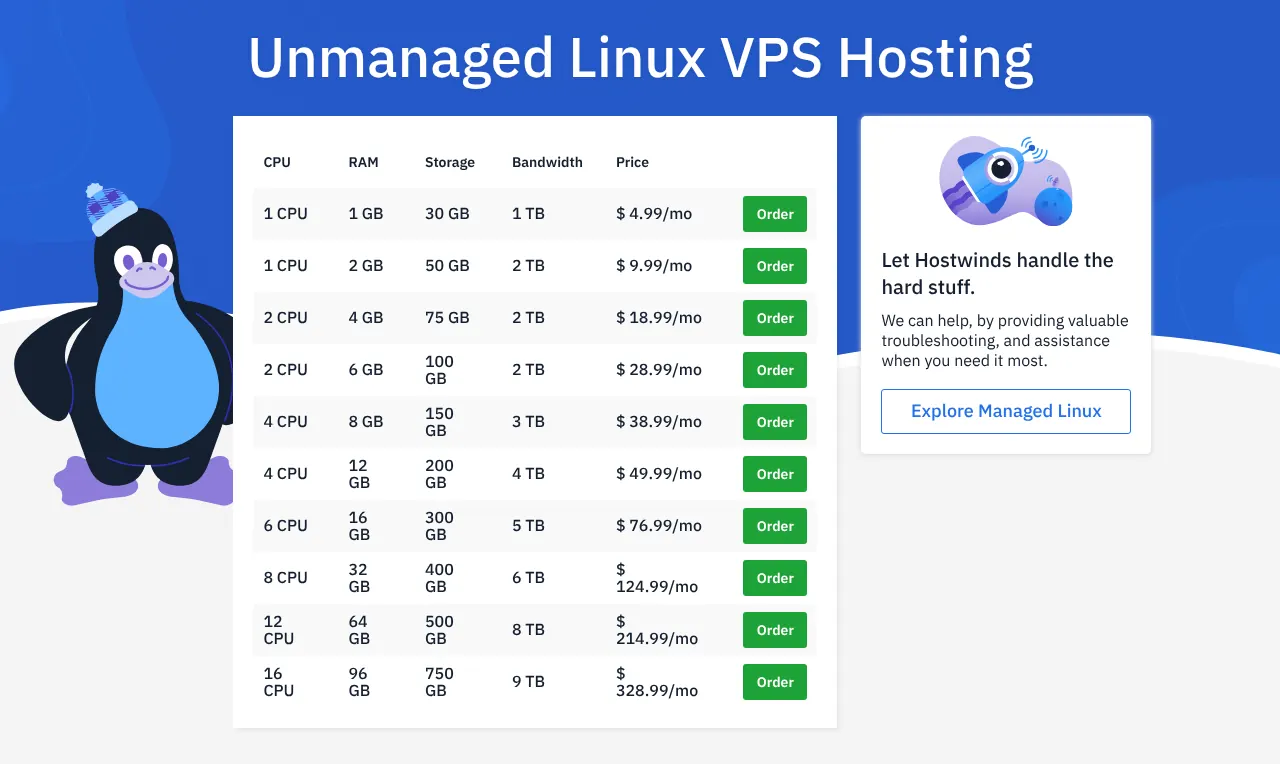
A data centre is the building where the server runs, and a closer one answers visitors faster. Akamai Cloud lists 33 core regions, DigitalOcean 16 data centres open to new servers, and Lightsail 15 regions. Hostwinds runs three: Seattle and Dallas in the United States, and Amsterdam.
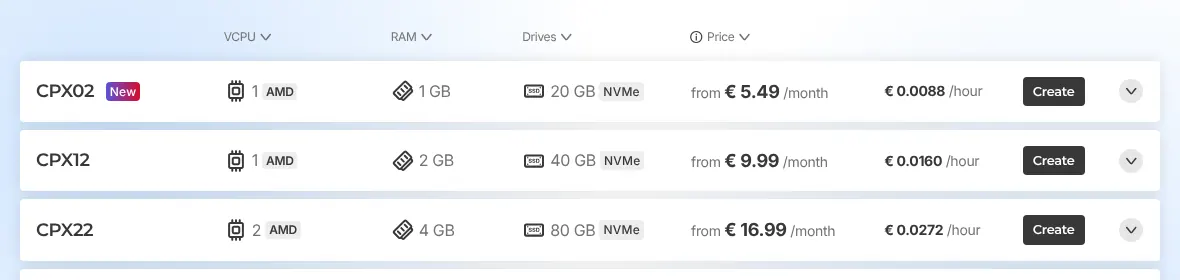
Prices can change with the location. Hetzner's entry server costs €5.49 in Helsinki and €6.49 in Germany, and its US plans start at €17.99.
6. Plan for growth
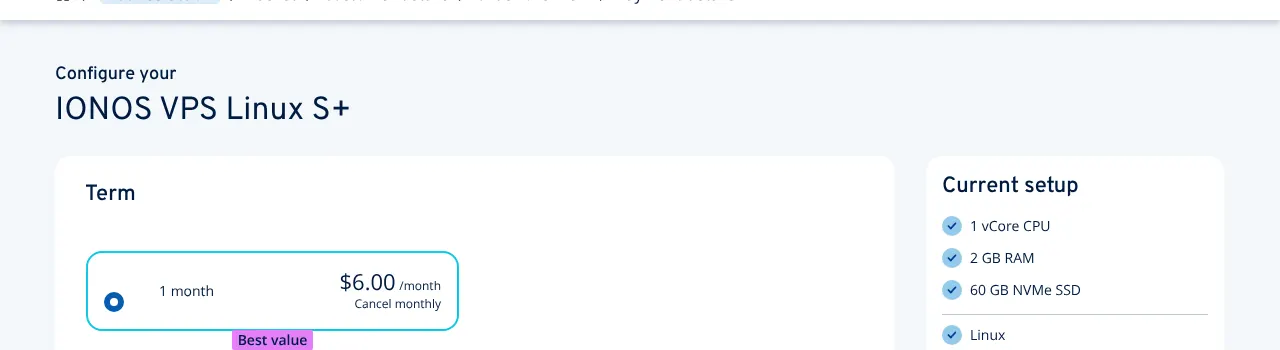
A server that grows with its site saves a move later. Most providers here allow adding memory or storage from the control screen. IONOS does not: a VPS+ plan cannot be changed after purchase.
Lightsail cannot resize a server in place either. A larger plan means a snapshot and a new server. If you expect traffic to grow within a year, pick a provider that resizes in place.