The score shortlists; it does not make the choice. All ten take card payments and track stock. Six checks narrow the list to one or two, each based on vendor pages read on 18 November 2026.
1. Count your products and your sales
Start with two numbers: how many products you will list, and what you expect to sell in a year. Several entry plans cap one of them. Ecwid Starter holds 10 products, and Volusion Personal holds 100 with $50K of yearly sales.
BigCommerce Core covers $30K of sales over twelve months, then moves the store to Growth at $105 a month. Shopify, Squarespace, BigCommerce and WooCommerce have no product cap. If your range will pass 100 products within a year, rule out the plans with a cap now.
2. Add the fee on each sale to the monthly price
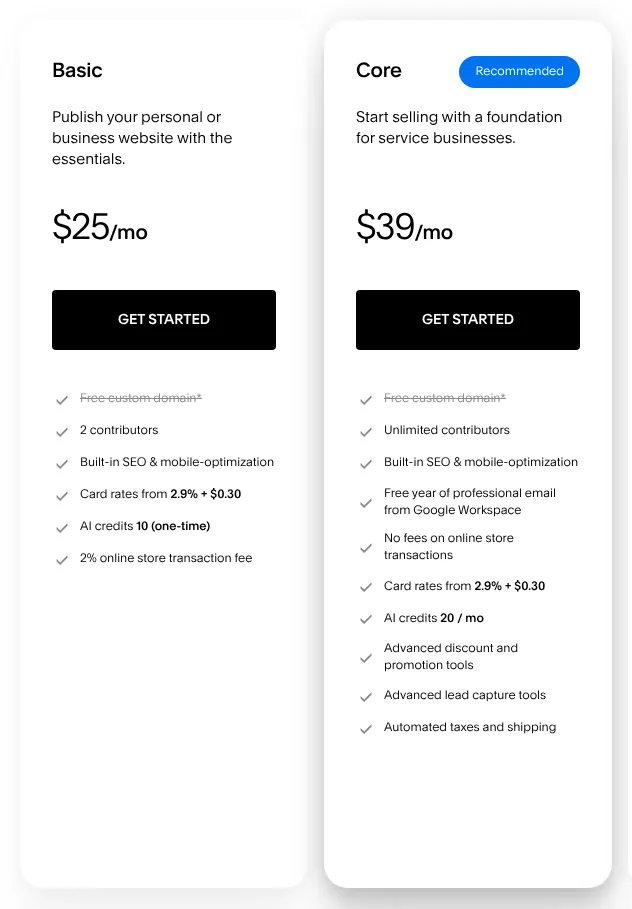
Two fees can apply to each sale. The card fee goes to the payment company and applies everywhere. Some platforms add a fee of their own on top. Squarespace Basic keeps 2% of each sale, and Shopify adds 2% on Basic when another payment provider is used.
The fee changes which plan is cheaper. A store selling $3,000 a month on Squarespace Basic pays $60 in fees, so $85 in all. Core costs $39 with no fee. Ecwid, WooCommerce and Lightspeed eCom say they add no fee of their own.
3. Check which plan sends abandoned cart emails
An abandoned cart email is an automatic reminder sent to a shopper who left items in the cart without paying. It is one of the cheapest ways to recover sales, and many vendors keep it for a higher plan.
Shopify and Squarespace include it from the first plan. Square needs Plus at $49, Ecwid needs Business at $65 and BigCommerce needs Growth at $105. Volusion sends reminders only by hand. If you expect regular traffic, compare the plan that sends them, not the entry plan.
4. Choose between hosted and self-hosted
A hosted platform runs the store on the vendor's servers for a monthly price, as Shopify and Wix do. A self-hosted platform is software you install on a server you rent, as with WooCommerce and Shopware Community Edition.
Self-hosted software is free to use, but the business pays for hosting and handles setup and upkeep, as Shopware states for its Community Edition. Woo estimates hosting at $25 to $350 a month for most stores. Pick self-hosted only if you, or someone you pay, can look after a website.
5. Plan for sales in person
If you also sell at a market or in a shop, check how the till connects to the online stock. Shopify includes its own till, Shopify POS, on every plan. Square and Lightspeed also sell tills, so online and shop sales share one item list.
Ecwid connects a till only on Unlimited, at $149 a month. BigCommerce relies on tills made by other companies, such as Square or Clover. If you sell in person every week, keep the platforms whose till is their own.
6. Read how the price is billed
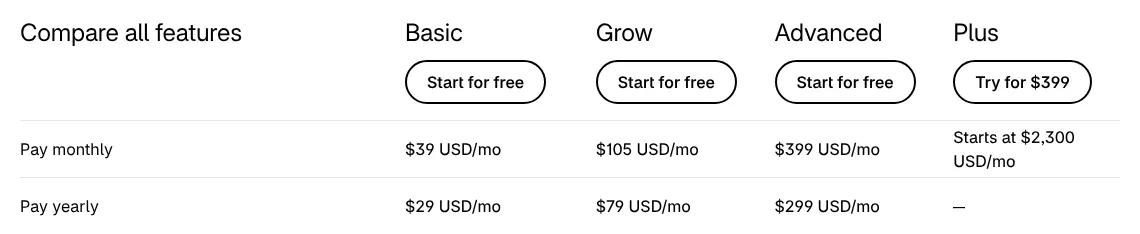
Many vendors show the yearly price first, and yearly billing means paying twelve months at once. Shopify Basic is $39 billed monthly and $29 a month paid yearly. Squarespace saves up to 36% on yearly plans.
Wix shows yearly prices only, and Lightspeed opens its page on yearly prices. Pay monthly while you test a platform, then switch to yearly once your store is selling.