All ten keep a set of books and send invoices, so the score only builds the shortlist. Six checks narrow it to one or two tools. Each check rests on vendor pages read on 16 November 2026.
1. Check that the cheapest plan keeps real books
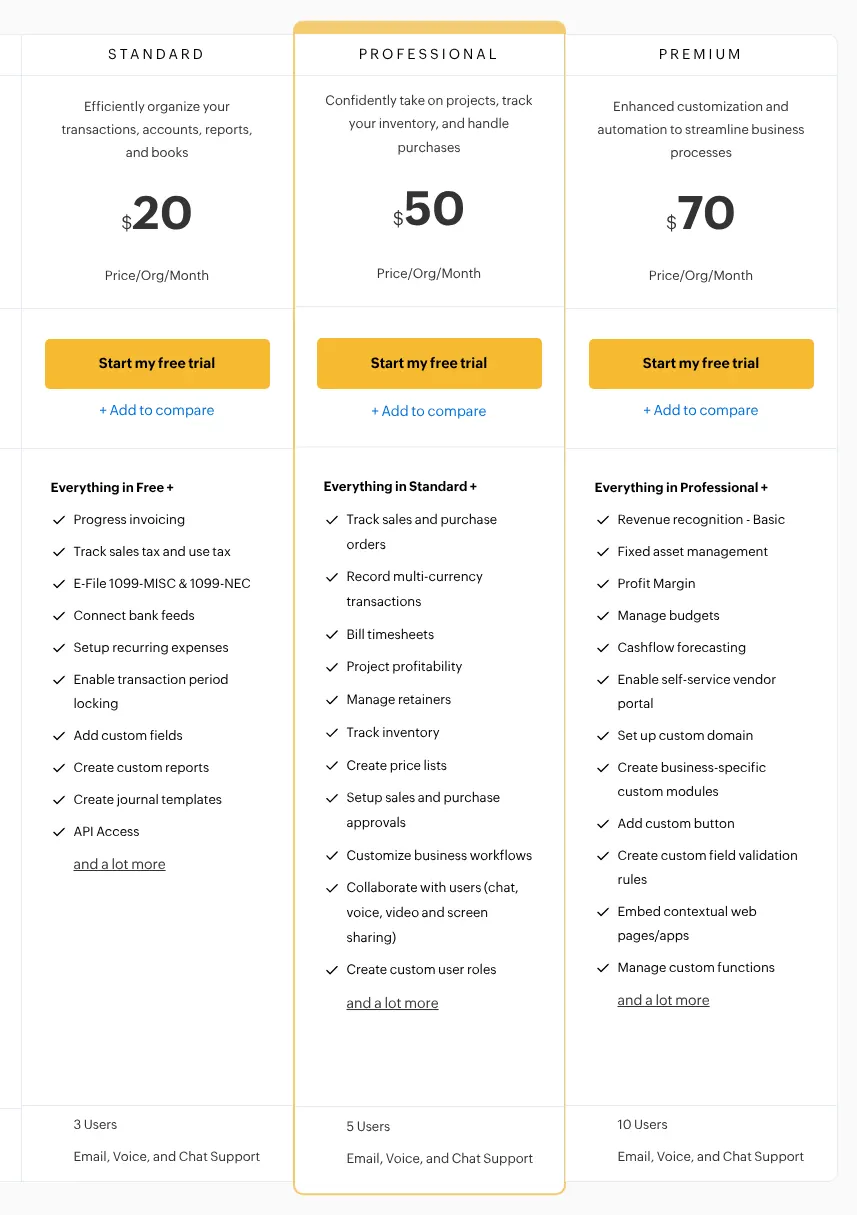
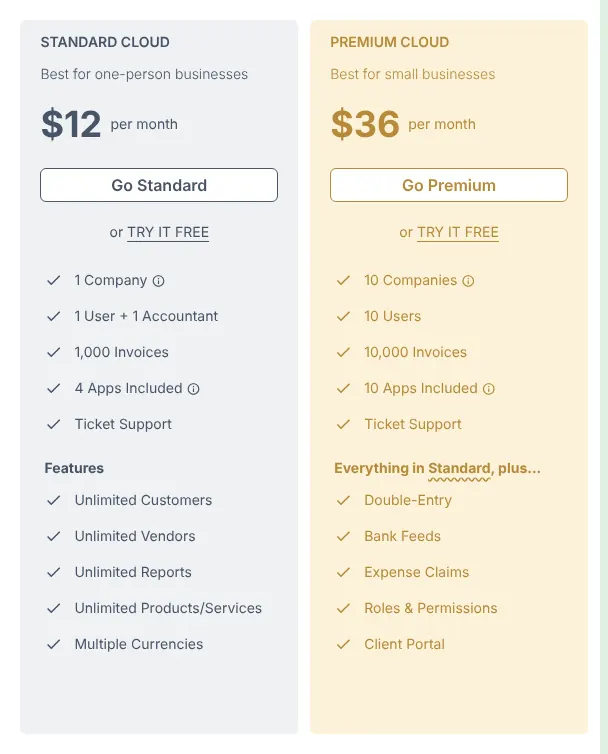
Some entry plans leave out the core of accounting. FreshBooks Lite has no chart of accounts, the list of categories every sale and cost is filed under. It has no balance sheet either, the report of what the business owns and owes on a given date. Bank reconciliation, which matches each bank line with a sale or a cost, is missing too. All three start on Plus. Akaunting's Standard Cloud has no double-entry books, where each amount is recorded twice, as a debit and a credit; they start on Premium Cloud. Zoho Books Standard has no supplier bills; they start on Professional.
The real starting price is the plan your accountant needs. On FreshBooks, that is $43 a month, not $23. On Akaunting, it is $36, not $12. Ask your accountant which reports they expect at year end, then price the plan that produces them.
2. Count the people who need a login
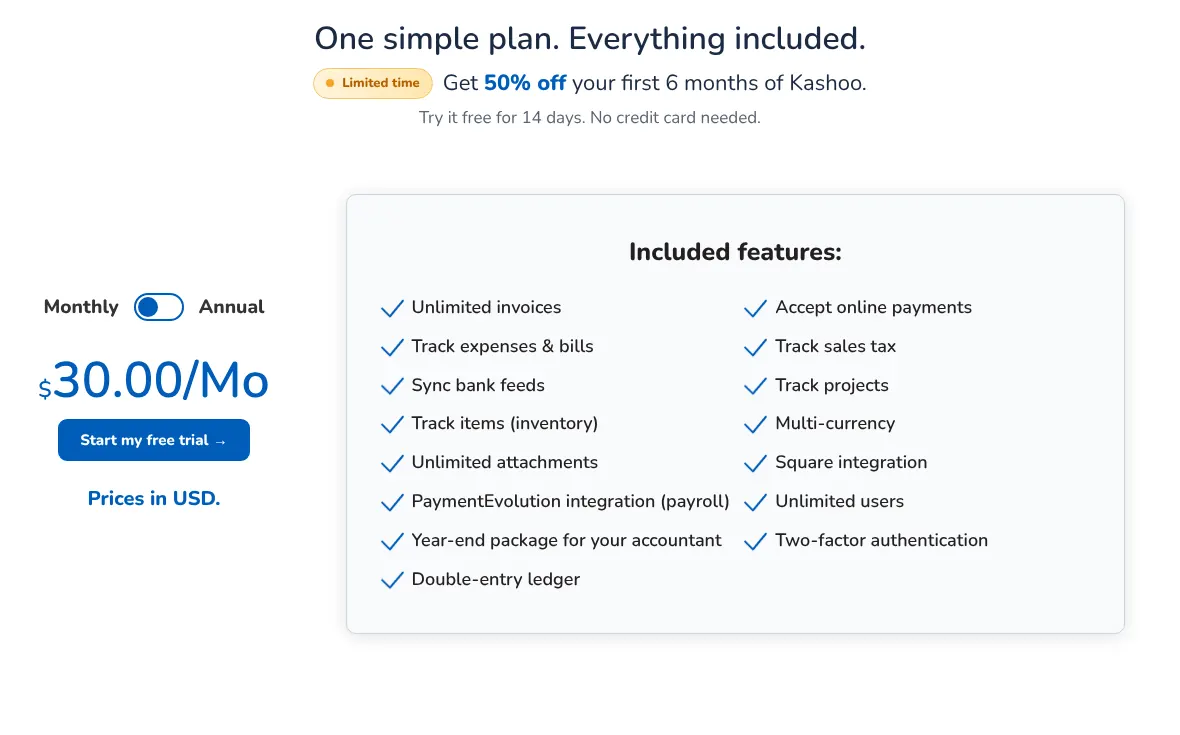
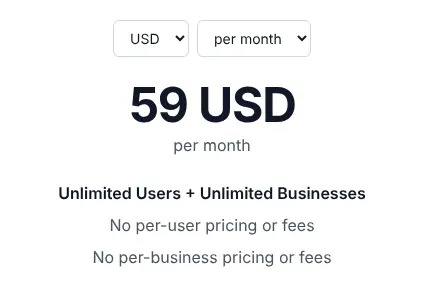
Prices move the most when colleagues join. Xero, Kashoo and the Manager cloud version include unlimited users. Zoho Books Standard includes 3 and charges $3 per extra user. FreshBooks charges $11 per team member. Odoo and QuickBooks Online charge by the user or by the plan.
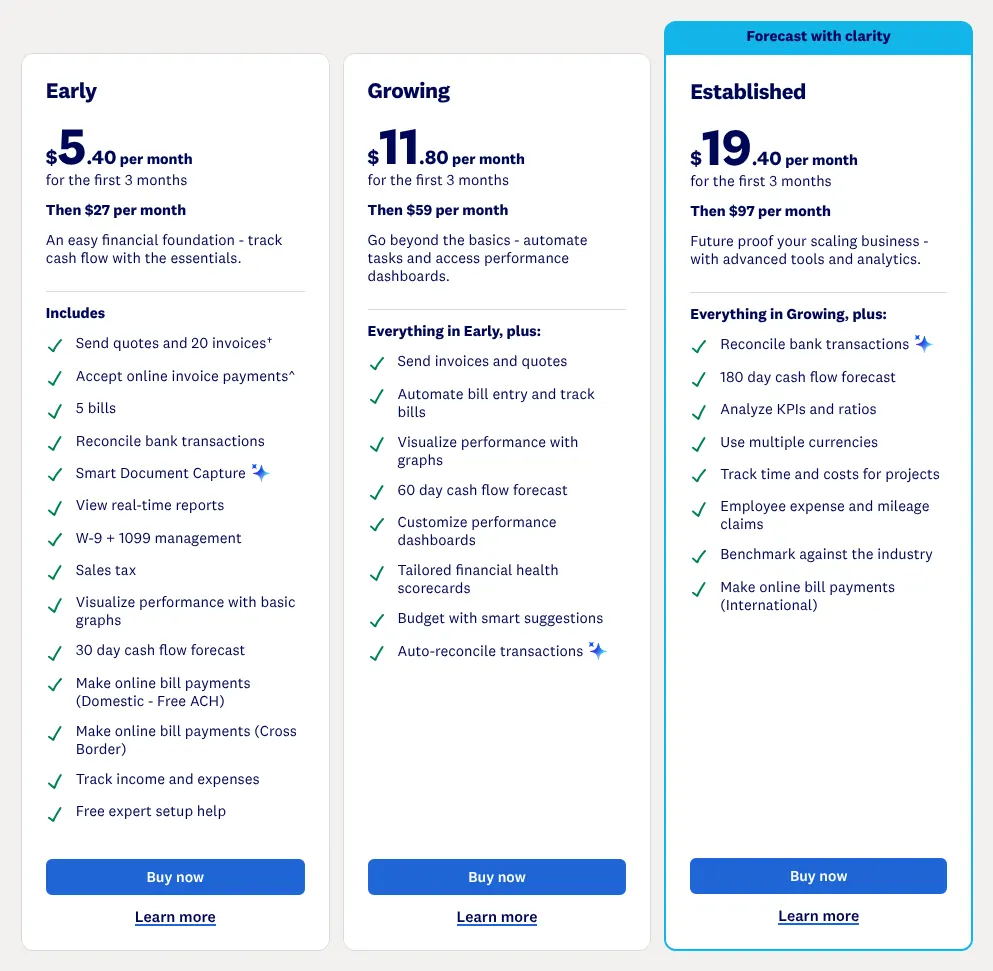
Take a team of five on monthly billing. Xero Early still costs $27 and Kashoo $30. Zoho Books Standard reaches $26 with two extra users. QuickBooks Online needs Plus, at $140. Odoo Standard costs $194.50 for five users, unless only the free Accounting app is used.
3. Find out which plan connects the bank
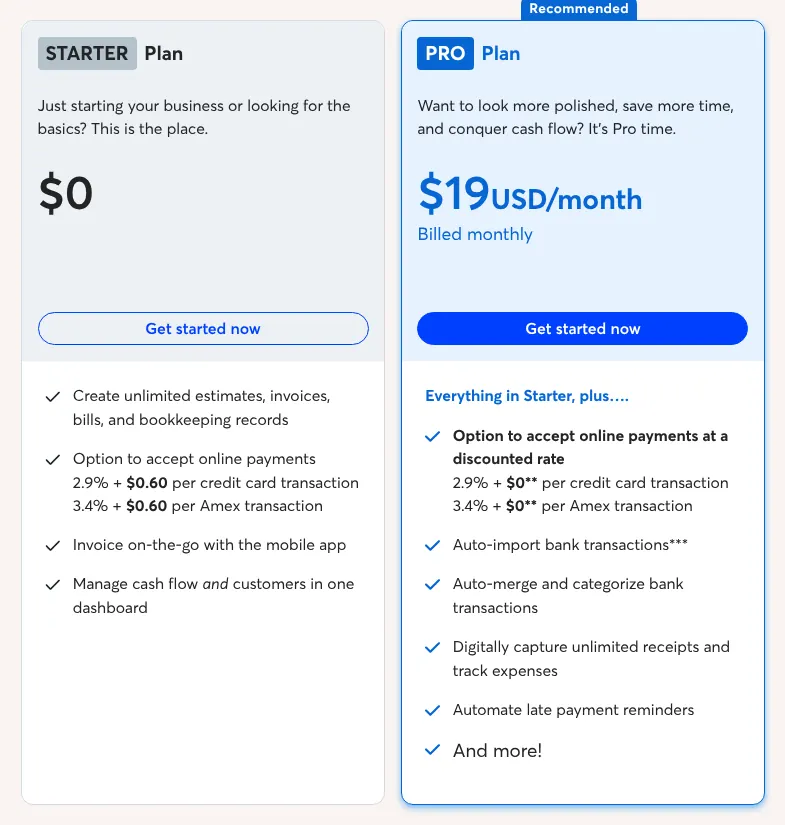
Bank feeds import each bank transaction on their own, so nothing is typed twice. Wave connects the bank only on Pro, at $19 a month. Akaunting needs Premium Cloud, at $36. On Xero Early, automatic matching of bank lines costs $5 more a month.
Without a feed, a business with 200 card payments a month types or uploads each one. On Wave, that is the difference between Starter at $0 and Pro at $19. If your bank is small, check that the tool lists it before you pay.
4. Price the plan that holds stock, projects and budgets
The features a growing business adds often sit two plans up. Zoho Books puts stock and projects on Professional, at $50 a month, and budgets on Premium, at $70. QuickBooks Online keeps all three for Plus, at $140. Xero puts projects and other currencies on Established, at $97.
Akaunting spreads them the furthest. Stock and projects need Elite Cloud, at $84 a month, and budgets need Ultimate Cloud, at $218. A shop that tracks stock pays $50 on Zoho Books and $140 on QuickBooks for that one need. Price the plan you will need in a year, not the first one.
5. Expect payroll on a separate bill
Odoo Standard and FreeAgent include payroll in the subscription, and FreeAgent's is for the UK. Akaunting Elite Cloud and Manager produce payslips without tax calculation. In the other six, payroll is a separate product or service. QuickBooks charges $50 a month plus $7 per employee. Xero's Gusto-powered payroll costs $36 plus $6 per person. Wave and FreshBooks both charge $40 plus $6.
For four employees, QuickBooks payroll adds $78 a month to the accounting plan. Xero's adds $60. Those amounts can exceed the accounting plan itself, so add them before you compare.
6. Read the regular price, not the welcome offer
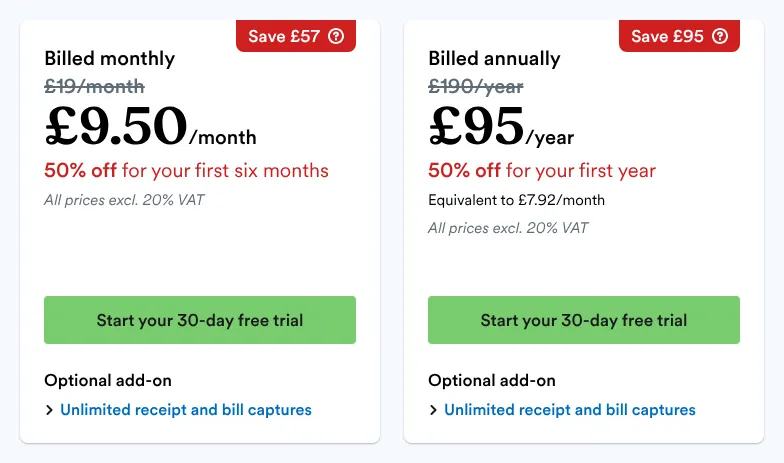
Xero, QuickBooks Online, FreshBooks, Kashoo, FreeAgent and Odoo lead their pricing pages with an offer for new customers. Xero shows 80% off for 3 months. QuickBooks shows 50% off for 3 months. FreshBooks shows 80% off for 4 months. Kashoo and FreeAgent show 50% off for six months, and Odoo a discount for 12 months. The regular price applies afterwards, and it is the one this page uses.
QuickBooks Simple Start costs $19 a month during the offer, then $38. Yearly billing also lowers the price but asks for twelve months up front: Zoho Books Standard falls from $20 to $15 a month. Pay monthly while you test a tool, then switch to yearly once you are sure.